
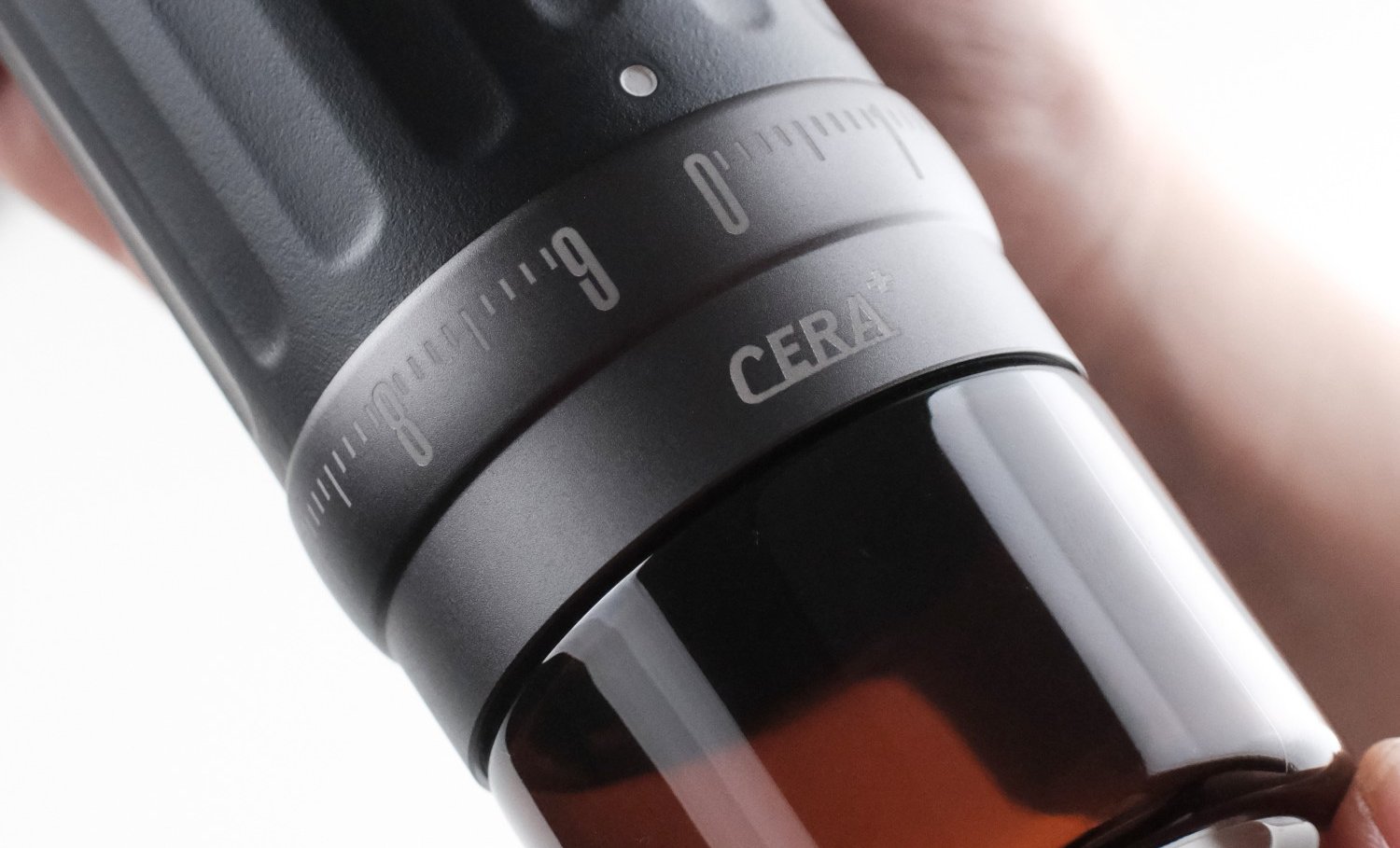
With the same beans, a scale and a recorded grind setting, you can already make more deliberate adjustments. Start with the preparation you currently use.
What changes when you grind finer or coarser?
During brewing, water takes up soluble substances from ground coffee. We call this extraction. Grind size affects how easily the water reaches those substances and how it flows through the coffee.
- Grinding finer increases the coffee's total surface area. With espresso and pour-over, the coffee bed usually also creates more resistance, so water flows more slowly.
- Grinding coarser usually gives water more room to flow through.
A finer grind does not produce ever-increasing extraction. Grinding too fine can disrupt flow, so different parts of the coffee are used unevenly. The goal is an even brew that tastes good.
Start with the recipe you use
Choose a recipe for your coffee and brewing method. Fix the quantities before adjusting the grinder.
Espresso
- What do you keep the same while dialling in?
- The dry coffee dose and the weight of espresso in your cup.
- An example starting point
- 18 g of coffee to 36 g of espresso, using a filter basket suitable for 18 g.
Filter coffee
- What do you keep the same while dialling in?
- The coffee dose and the amount of brewing water.
- An example starting point
- 18 g of coffee to 300 g of water.
These are starting points. Your roaster's or brewer's recipe may differ. For espresso, use a dose suited to your filter basket. With filter coffee, some water remains in the grounds, so 300 grams of water produces less than 300 grams of drink.
Keep the beans, water source, temperature and preparation as consistent as possible too.
Change one setting at a time
Adjust only the grind. Brew time may change as a result, helping you see the effect. If you also use more coffee or stop your espresso earlier, you are comparing different recipes.
Make a small adjustment and record it. The size of the step needed varies by grinder. Also check which direction is finer and how your grinder may be adjusted.
Grounds from the previous setting can remain in the grinder. If needed, remove them according to your grinder's instructions. The amount required varies by model. Weigh the coffee you actually use again, especially with a grinder that doses by time.
Espresso: keep your yield fixed
These steps are for espresso with an ordinary single-wall filter basket. With pressurised baskets and fully automatic machines, the system's own settings also play a part.
- Let your machine reach temperature according to its instructions.
- Weigh your coffee dose. Distribute the grounds evenly and tamp straight down, the same way each time.
- Place your cup on a scale and tare it. Start brewing and stop at the chosen weight, for example 36 grams of espresso.
- Record the time and taste. Always measure from the same point, such as when the pump starts, including any pre-infusion.
- Choose a small adjustment based on both taste and how the brew progresses.
Use a time guideline from your recipe as a reference. You do not need to change a good-tasting espresso to hit an exact number of seconds. Longer pre-infusion or a different recipe also makes times less directly comparable.
When dialling in, stop at the same weight in your cup. Then look at how much time it took.
Filter coffee: keep your pouring technique consistent too
With pour-over, the amount of water per pour, the pace and stirring or swirling affect brewing. Keep those actions the same when comparing grind settings. Use the same filter paper and amount of coffee too.
- Does the coffee taste sharply sour and lack sweetness? Try a slightly finer grind.
- Does it taste astringent or dry and flow slowly? Try a slightly coarser grind.
- Does it taste pleasant? Record the setting, even if the time differs from a guideline.
A long brew time can also result from a clogged filter. Excessive stirring or swirling can move small particles towards the paper and slow the flow. If this seems to be the problem, keep your grind the same and first test a gentler preparation.
In a cafetière, the coffee steeps in the water. Steeping time is a chosen part of the recipe. Do not use pour-over brew times for it.
When is the problem something other than the grind?
The flavour signals above are starting points. Bright acidity may be part of the bean. Bitterness can come from the roast. The roast partly determines which flavours dialling in can bring out.
Does the result vary greatly without any adjustment? Check your dose and preparation first. In espresso, water can find an easy route through the coffee and reach other areas less well. This is called channeling and can produce several unpleasant flavours at once. Grinding ever finer does not automatically fix it.
Do you like the flavour but find the coffee too strong? Add some hot water to a test cup. This tests a lower concentration without brewing again. If you then want to adjust the ratio, first keep the grind fixed during that comparison.
Make your next attempt recognisable
Record enough to find a good brew again:
- Which beans you use and when they were roasted.
- Your grinder and grind setting.
- The coffee dose and, for espresso, the yield; for filter, the water used.
- The brewing time and how you measure it.
- What you taste and which adjustment you want to try.
Repeat a promising setting before adjusting further. Different beans, doses or filter baskets may require dialling in again.
A grind setting is a reference point on your grinder. The same setting on another example of that grinder need not produce the same grind. Use your notes to find what worked for you more quickly next time.
