
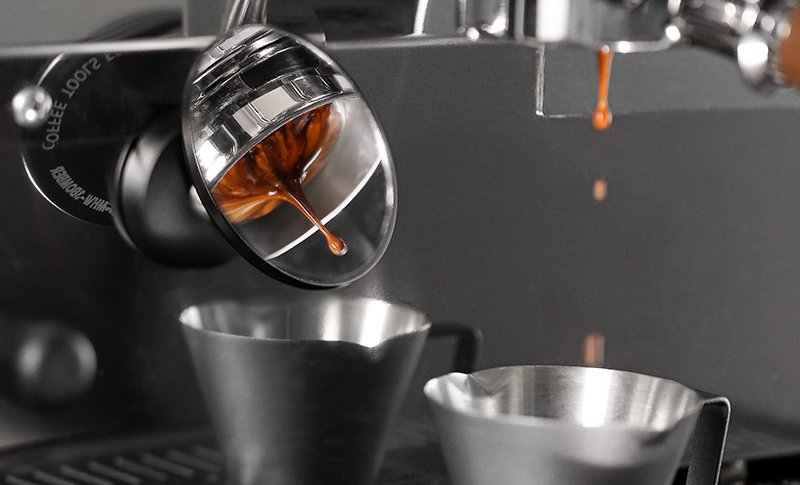
To make more deliberate adjustments, it helps to understand three things: extraction, strength and evenness.
What does the water take from the coffee?
Coffee extraction is the process in which water takes up soluble substances from ground coffee. These substances contribute to the flavour of your cup. Much of the ground coffee does not dissolve and remains as used grounds.
This happens with espresso, filter coffee and a cafetière. Cold water can also take up substances from coffee, but usually more slowly. This is why cold brew needs a different brewing time.
Your recipe aims to bring out a pleasant combination of flavours. How much you extract is one part of that. Concentration and water distribution over the coffee also matter.
The difference between extraction and strength
When brewing, you can distinguish these three concepts:
A small espresso can taste strong even when relatively little has been extracted from the coffee. A lighter filter coffee may have been extracted further. Here, strength means concentration, not the amount of caffeine or how dark the beans are roasted.
Adding water to brewed coffee reduces its strength. At that point, nothing more is being extracted from the grounds.
If you pass extra water through the coffee during brewing, more can dissolve. This also affects extraction.
Taste the difference with two cups
A simple comparison shows what dilution does to your coffee:
- Brew coffee as usual and stir the drink.
- Divide the coffee into two equal portions.
- Add a little warm water to one portion. For example, 10 grams of water to 40 grams of brewed coffee. Stir both portions.
- Taste them at a similar, comfortable drinking temperature. Pay attention to strength, acidity, bitterness and what you enjoy.
The diluted portion has a lower concentration. This can change how the balance comes across and make some flavours easier to recognise. The coffee in both cups comes from the same brew.
Do you prefer the diluted portion? That suggests a lower strength may suit your taste better. You do not need to change your grind immediately to achieve that.
Flavours overlap during brewing
Different substances are released from coffee at different speeds. However, brewing cannot be divided into fixed stages in which only acidity appears first, followed by sweetness and finally bitterness. Bitter substances can also emerge early in the brew.
What you taste depends on both the combination and concentration of substances. Aroma also plays a part. A coffee that reminds you of caramel need not contain a clearly detectable amount of sugar. Brewing longer until enough sugar has dissolved is therefore not a reliable way to find sweetness.
The bean, processing and roast form the starting point. Your preparation can bring certain flavours more or less to the fore.
Under-extraction, over-extraction and what you taste
A coffee from which too little has been extracted for the chosen recipe is called under-extracted. Such a cup can taste sharply sour and lack sweetness. These are clues to examine your preparation further.
Over-extraction describes a brew that has gone too far for the desired flavour. An astringent, bitter or drying cup often brings it to mind. But bitterness can also come from the roast or stand out more at a high concentration. And a bright acidity may simply be part of the coffee.
Describe what you taste first. Use that together with how the brew progresses to choose an adjustment.
An extraction percentage helps compare brews. There is no percentage that guarantees the most delicious cup for every coffee and every drinker. To brew more deliberately at home, start with a scale, a consistent recipe and your own taste.
Why even brewing matters so much
Water does not automatically reach every part of the coffee equally well. With espresso, it can find an easy route through the coffee bed. This is called channeling. Some areas are then used more than others, so the cup can taste both sharp and astringent.
Distribute the grounds evenly and tamp straight down. With pour-over coffee, it helps to wet all the grounds thoroughly and repeat your pouring technique.
Grinding ever finer can actually disrupt flow. Excessive stirring or swirling in a pour-over can also move small particles towards the paper and slow the flow. Find a preparation you can carry out evenly and repeat.
Which settings can you change?
Grind
A finer grind increases the coffee's total surface area. This can promote extraction. With espresso and pour-over, resistance usually also increases, making water flow more slowly. Adjust in small steps and keep the dose the same.
Dose and ratio
Weigh the coffee and the water or drink specified in your recipe. With filter coffee, record the water added. With espresso, weigh the yield in your cup.
Passing more water through the same dose changes your recipe. Keep quantities fixed when comparing grind settings.
Contact time
How long water and coffee stay in contact affects extraction. With espresso and pour-over, brew time often changes with your grind and the resistance of the coffee bed.
In a cafetière, the coffee steeps in the same water. Uptake slows as the drink becomes more concentrated. An extra half-minute has a different meaning there than with a fast-flowing espresso. Use a time that suits your brewing method and recipe.
Water temperature
Warmer water generally speeds up the uptake of substances. The temperature that works well depends on your coffee and the rest of your recipe. Start with the temperature specified in your recipe and keep it fixed while adjusting the grind.
The water itself
The composition of the water affects flavour. Substances in the water can, for example, change perceived acidity. Use the same water source when comparing, so you can better assess the effect of your adjustment.
From tasting to your next brew
Choose one change. These situations offer a practical starting point:
Record your recipe, grind setting and what you taste. Brew again, compare and save a setting that works well. In dialling in your grind, step by step, you will find the practical guide for espresso and filter coffee.
